

Choosing the right delivery vehicle in the UK depends on more than the size of your goods. You also need to consider the weight, number of pallets, load volume, dimensions, loading method and delivery requirements.
A small parcel may only need a small van, while several pallets of building materials could require a 7.5-tonne truck, 18-tonne lorry or even an Arctic vehicle.
Using the correct vehicle helps prevent capacity problems, unnecessary transport costs and delays at collection or delivery.
This UK delivery vehicle guide explains the main types of courier and transport vehicles, their approximate capacity, payload and pallet capacity, and when each vehicle is suitable.
Delivery Vehicle Capacity
Here is a quick comparison of the main delivery vehicles available for different types of loads:
| Vehicle | Pallet Capacity | Maximum Payload | Approx. Volume | Suitable For |
| Small Van | 1 UK pallet | 500kg | 2m³ | Parcels, documents, small items |
| Sprinter Van | 4 UK pallets | 1,050kg | 13m³ | Bulky goods and commercial loads |
| Luton Van | 7 EU pallets | 1,050kg | 14m³ | Furniture and larger shipments |
| 7.5-Tonne Truck | 10 UK pallets | 2,500kg | 25m³ | Medium commercial loads |
| 18-Tonne Truck | 14 UK pallets | 8,000kg | 38m³ | Heavy commercial deliveries |
| 26-Tonne Truck | 15 UK pallets | 14,000kg | 65–80m³ | Large and heavy loads |
| Arctic 44-Tonne Truck | 26 UK pallets | 27,000kg | 65–80m³ | Full-load and high-volume transport |
Actual capacity can vary depending on the load, pallet dimensions, vehicle configuration and legal payload.
What Is a Delivery Vehicle?
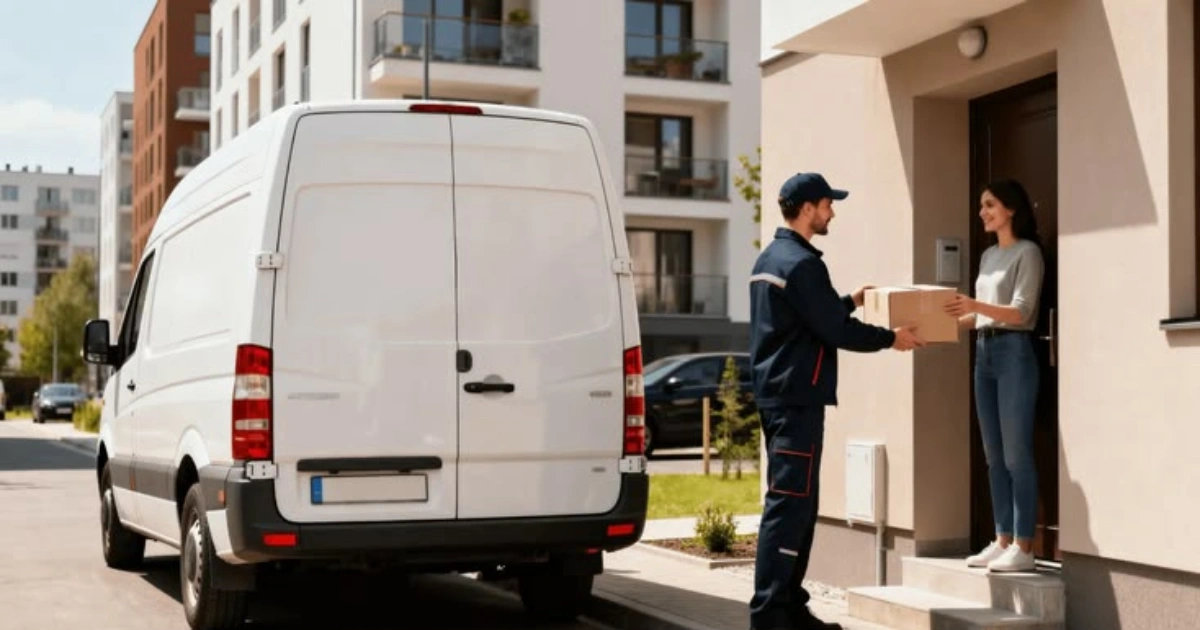
A delivery vehicle is a van, truck or lorry used to transport goods from one location to another.
Courier and logistics companies use different vehicle sizes because not every shipment has the same requirements.
For example:
- Documents can usually travel in a small van.
- One pallet may only require a small van.
- Several pallets may need a Sprinter or Luton van.
- Heavier commercial consignments may require a 7.5-tonne or 18-tonne truck.
- Large palletised loads may need a 26-tonne or 44-tonne Arctic truck.
The important point is that vehicle size and payload are different measurements. A vehicle may have enough space for your goods but still be unable to legally carry their weight.
Which Delivery Vehicle Is Right for Your Load
Small Van
A small van is suitable for light deliveries where speed and flexibility are more important than carrying capacity.
It is often used for urgent courier work, documents, parcels and smaller commercial items.
Small Van Capacity
- Pallet capacity: 1 standard UK pallet
- Maximum payload: 500kg
- Approximate volume: 2m³
A small van can be a practical choice when you have one pallet or a small quantity of goods that does not require a larger vehicle.
What Can a Small Van Carry?
Typical loads include:
- Parcels
- Documents
- Small equipment
- Retail goods
- Small commercial items
- Samples
- Boxes and cartons
- Urgent deliveries
For same-day courier services, a small van can also be useful when the shipment needs direct transportation without unnecessary stops.
Sprinter Van
A Sprinter van provides considerably more space than a small van while remaining suitable for commercial and courier deliveries.
It is useful for bulky goods, multiple pallets and deliveries where a standard small van does not provide enough loading space.
Sprinter Van Capacity
- Pallet capacity: 4 standard UK pallets
- Maximum payload: 1,050kg
- Approximate volume: 13m³
What Is a Sprinter Van Used For?
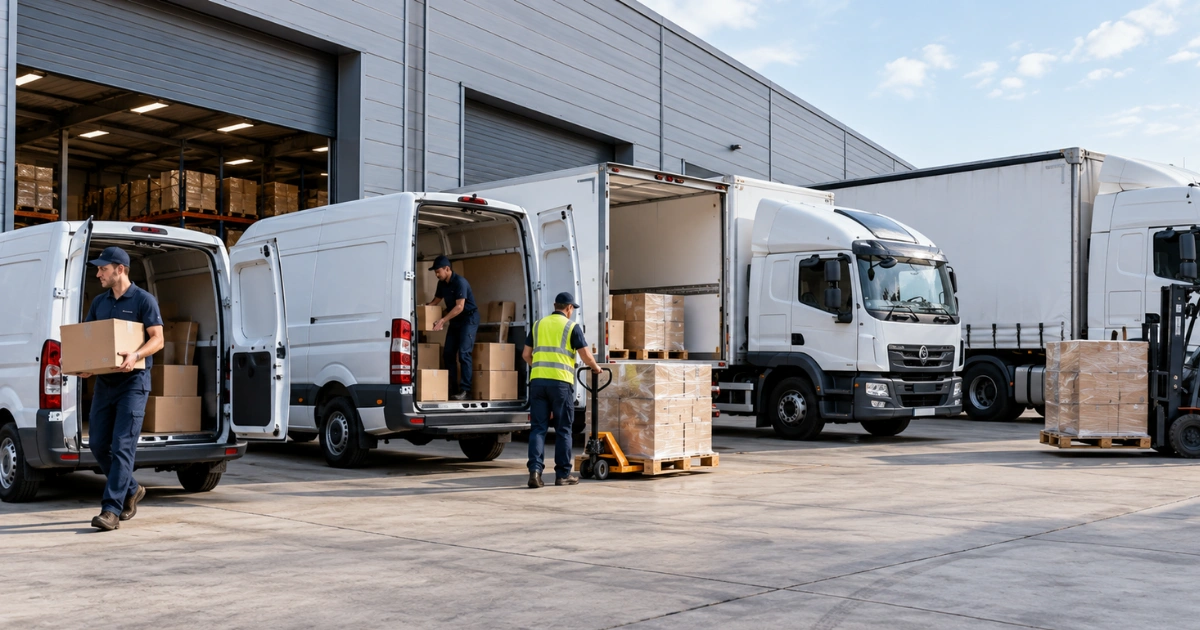
A Sprinter van can transport:
- Up to four standard UK pallets
- Commercial stock
- Furniture
- Equipment
- Retail consignments
- Construction materials
- Bulky parcels
- Multi-drop deliveries
It can be a good middle ground between a small courier van and a larger truck.
Luton Van
A Luton van is commonly used when you need more loading volume than a standard van can provide.
Its box-shaped body gives you additional usable space for bulky goods, furniture and larger consignments.
Luton Van Capacity
- Pallet capacity: up to 7 EU pallets
- Maximum payload: 1,050kg
- Approximate volume: 14m³
- Tail lift: Available
A Luton van is particularly useful when the shipment is bulky rather than extremely heavy.
What Can a Luton Van Carry?
Common examples include:
- Furniture
- Office equipment
- Large retail consignments
- Exhibition equipment
- Commercial stock
- Household items
- Multiple pallets
- Bulky business deliveries
The tail lift option can also make loading and unloading heavier or palletised goods easier where suitable access is available.
7.5-Tonne Truck
A 7.5-tonne truck is a popular option for medium-sized commercial deliveries.
It provides substantially more payload and cubic capacity than a van, making it suitable for larger palletised consignments.
7.5-Tonne Truck Capacity
- Pallet capacity: up to 10 standard UK pallets
- Maximum payload: 2,500kg
- Approximate volume: 25m³
- Tail lift: Available
When Should You Use a 7.5-Tonne Truck?
This vehicle can be suitable for:
- Building materials
- Commercial stock
- Machinery
- Furniture
- Pallet deliveries
- Construction supplies
- Larger retail shipments
- Business-to-business deliveries
If your load is too large for a Luton but does not justify a heavy 18-tonne vehicle, a 7.5-tonne truck can provide a practical solution.
18-Tonne Truck
An 18-tonne truck is designed for heavier commercial transport and larger palletised consignments.
It offers considerably more payload and loading volume than smaller vans and trucks.
18-Tonne Truck Capacity
- Pallet capacity: up to 14 standard UK pallets
- Maximum payload: 8,000kg
- Approximate volume: 38m³
- Tail lift: Available
What Is an 18-Tonne Truck Used For?
Typical applications include:
- Heavy construction materials
- Industrial equipment
- Machinery
- Large commercial consignments
- Palletised goods
- Manufacturing supplies
- Large retail deliveries
- Heavy haulage support work
An 18-tonne truck becomes particularly useful when the weight of the shipment is more important than simply fitting the goods into a van.
6. 26-Tonne Truck
A 26-tonne truck is intended for large commercial loads that require significantly greater payload capacity.
It can carry up to 15 standard UK pallets and offers a large amount of loading space.
26-Tonne Truck Capacity
- Pallet capacity: 15 standard UK pallets
- Maximum payload: 14,000kg
- Approximate volume: 65–80m³
- Tail lift: Available on request
What Can a 26-Tonne Truck Transport?
It can be suitable for:
- Heavy machinery
- Construction materials
- Industrial equipment
- Large pallet consignments
- Manufacturing goods
- Commercial stock
- High-volume freight
- Heavy business deliveries
For loads that are too heavy for a 7.5-tonne or 18-tonne truck, a 26-tonne vehicle may provide the required payload capacity.
Arctic 44-Tonne Truck
An Arctic 44-tonne truck is one of the largest standard options in this vehicle range.
It combines a tractor unit with a trailer and provides substantial capacity for large-scale freight and full-load transport.
Arctic Truck Capacity
- Pallet capacity: up to 26 standard UK pallets
- Maximum payload: 27,000kg
- Approximate volume: 65–80m³
- Tail lift: Available on request
When Do You Need an Arctic Truck?
An Arctic can be suitable for:
- Large palletised consignments
- Full-load transport
- Industrial freight
- Heavy commercial goods
- Construction materials
- Manufacturing shipments
- High-volume distribution
- Nationwide logistics
If your shipment involves a large number of pallets or a high total weight, an Arctic vehicle can provide the capacity needed for the job.
Delivery Vehicle Sizes and Pallet Capacity
Pallet capacity is one of the easiest ways to compare delivery vehicles, but it should not be the only factor you consider.
A vehicle may physically accommodate a certain number of pallets while the total weight of those pallets exceeds its legal payload.
For example, a shipment could occupy only a few pallet spaces but still be too heavy for a smaller van.
The approximate capacities are:
- Small Van: 1 UK pallet
- Sprinter Van: 4 UK pallets
- Luton Van: up to 7 EU pallets
- 7.5-Tonne Truck: up to 10 UK pallets
- 18-Tonne Truck: up to 14 UK pallets
- 26-Tonne Truck: 15 UK pallets
- Arctic 44-Tonne: 26 UK pallets
Always provide both the number of pallets and total weight when requesting a vehicle.
Payload vs Pallet Capacity: What Is the Difference?
These two terms are often confused.
Pallet Capacity
Pallet capacity tells you approximately how many pallets can fit into the vehicle.
For example, a vehicle may have space for 10 standard UK pallets.
Payload
Payload tells you how much weight the vehicle can legally carry.
For example, a vehicle may have a maximum payload of 2,500kg.
This means a shipment could potentially fit into the available space but still be too heavy for the vehicle.
Why Does Payload Matter?
Choosing a vehicle based only on dimensions can create problems at collection.
When booking a courier, provide:
- Number of pallets
- Weight per pallet
- Total shipment weight
- Pallet dimensions
- Overall dimensions
- Whether goods can be stacked
- Loading requirements
- Delivery location
This allows the transport provider to identify a suitable vehicle.
How Do You Choose the Right Delivery Vehicle?
The right vehicle depends on the characteristics of your load.
1. Consider the Number of Pallets
Start by identifying how many pallets you need to transport.
One pallet may require only a small van, while 20 or more pallets could require an Arctic vehicle.
2. Check the Total Weight
Calculate the combined weight of the shipment.
Do not assume that a vehicle with enough floor space can automatically carry the load.
3. Measure the Goods
Measure the length, width and height of your shipment.
Oversized or unusually shaped goods may require more space than standard pallet calculations suggest.
4. Consider Loading Requirements
Some deliveries need specialist loading equipment.
A tail lift can help move palletised or heavy goods between ground level and the vehicle where appropriate.
5. Consider Access
Think about where the vehicle needs to collect and deliver the goods.
Narrow roads, restricted entrances, construction sites and limited loading areas can affect which vehicle is practical.
6. Consider Delivery Urgency
The vehicle choice can also depend on how quickly the shipment needs to arrive.
For urgent transport, a smaller dedicated vehicle may be suitable for a direct journey, while larger freight may require planned transport arrangements.
What Information Should You Give a Courier When Booking a Vehicle?
Accurate information makes it easier to select the correct delivery vehicle.
When requesting a quote, provide:
- Collection postcode
- Delivery postcode
- Number of items
- Number of pallets
- Pallet dimensions
- Total weight
- Individual item weights
- Overall dimensions
- Collection date
- Required delivery time
- Loading and unloading requirements
- Tail lift requirements
- Whether the goods are fragile
- Whether the goods require special handling
For heavy or oversized loads, provide as much information as possible before collection.
Which Delivery Vehicle Is Best for Pallet Transport?
There is no single vehicle that is best for every pallet delivery.
Your choice depends on the number of pallets, total weight and volume.
For 1 Pallet
A small van can be suitable when the pallet is within the vehicle’s payload limit.
For 2–4 Pallets
A Sprinter van provides more loading space and can carry up to four standard UK pallets.
For Larger or Bulky Loads
A Luton van can provide additional loading volume and capacity for larger shipments.
For Up to 10 Pallets
A 7.5-tonne truck can be suitable for medium-sized commercial consignments.
For Heavy Commercial Loads
An 18-tonne or 26-tonne truck can provide considerably higher payload capacity.
For Large Full Loads
An Arctic 44-tonne truck can carry up to 26 standard UK pallets and a maximum payload of up to 27,000kg based on the stated vehicle specification.
Do You Need a Tail Lift for Pallet Delivery?
A tail lift can be useful when there is no loading dock, forklift or other suitable equipment at the collection or delivery point.
It allows suitable goods to be moved between ground level and the vehicle.
Tail lifts are available on several vehicles, including:
- Luton vans
- 7.5-tonne trucks
- 18-tonne trucks
- 26-tonne trucks
- Arctic trucks
You should mention the requirement when booking, because availability can depend on the specific vehicle.
Delivery Vehicles for Construction and Commercial Loads
Construction companies often transport materials, tools, equipment and machinery between suppliers, warehouses and job sites.
The vehicle requirement can change from one delivery to another.
For example:
Small Van: documents, tools or smaller materials.
Sprinter: several pallets or bulky construction supplies.
Luton: larger equipment, furniture or multiple palletised items.
7.5-Tonne: medium-sized material deliveries.
18-Tonne: heavier construction materials and commercial loads.
26-Tonne: large and heavy consignments.
Arctic: high-volume palletised freight and full-load transport.
The correct choice depends on the actual shipment rather than simply the industry.
Same-Day Delivery Vehicle Selection
For a same-day courier, vehicle selection becomes especially important because the shipment may need to travel directly from collection to delivery.
A small van can work well for urgent parcels and light goods.
For larger loads, a Sprinter, Luton or truck can provide the additional capacity required.
A dedicated vehicle can also reduce unnecessary handling and additional delivery stops when the shipment requires direct transport.
Can One Vehicle Carry More Pallets Than Its Rated Capacity?
You should not assume that additional pallets can simply be loaded because there appears to be physical space.
Vehicle capacity depends on both available loading space and legal payload.
The pallet dimensions, weight distribution, vehicle configuration and load restrictions all need to be considered.
This is why professional courier and haulage planning should assess the complete shipment before allocating a vehicle.
Frequently Asked Questions
What is the best delivery vehicle for one pallet?
A small van can carry one standard UK pallet up to its stated payload limit. Larger or heavier pallets may require a different vehicle.
How many pallets can a Sprinter van carry?
A Sprinter van can carry up to 4 standard UK pallets, with a maximum payload of 1,050kg and approximately 13m³ of space.
How many pallets can a Luton van carry?
The stated Luton van capacity is up to 7 EU pallets, with a maximum payload of 1,050kg and approximately 14m³ of space.
How many pallets can a 7.5-tonne truck carry?
The stated capacity is up to 10 standard UK pallets, with a maximum payload of 2,500kg.
How many pallets can an 18-tonne truck carry?
An 18-tonne truck can carry up to 14 standard UK pallets, with a maximum payload of 8,000kg based on the stated specification.
How many pallets can a 26-tonne truck carry?
A 26-tonne truck can carry up to 15 standard UK pallets and has a stated maximum payload of 14,000kg.
How many pallets can an Arctic lorry carry?
An Arctic 44-tonne truck can carry up to 26 standard UK pallets, with a stated maximum payload of 27,000kg.
How do I know which delivery vehicle I need?
Provide the courier with the number of pallets, total weight, dimensions, collection and delivery details, and any loading requirements. These details help determine the appropriate vehicle.
Can delivery vehicles transport heavy and oversized goods?
Yes, larger trucks can handle many heavy commercial consignments. However, oversized or abnormal loads may require additional planning, equipment, permissions or specialist transport arrangements.
Final Words
The right delivery vehicle in the UK depends on more than how much space your goods appear to take up.
You need to consider pallet capacity, payload, cubic volume, dimensions, loading requirements and delivery conditions together.
A small van may be ideal for one lightweight pallet or an urgent parcel, while a Sprinter, Luton, 7.5-tonne truck, 18-tonne truck, 26-tonne truck or Arctic lorry may be more appropriate as the shipment becomes larger or heavier.
Providing accurate shipment information before booking helps ensure that the vehicle is suitable for the load from the start.


