

Choosing the right vehicle for a commercial delivery depends on the weight, size, volume and number of pallets you need to transport. For larger and heavier consignments, a van may not provide enough capacity, while using a much larger vehicle than necessary can increase transport costs.
An 18-tonne truck is a practical option for many heavy commercial deliveries across the UK. It offers considerably more payload and loading space than smaller delivery vehicles, making it suitable for palletised goods, construction materials, machinery and other large consignments.
But when should you actually use an 18-tonne truck?
The answer depends on the load rather than simply its overall size.
What Is an 18-Tonne Truck?
An 18-tonne truck is a heavy commercial vehicle with a gross vehicle weight of up to 18 tonnes. The available payload depends on the specific vehicle and body configuration.
For commercial transport, an 18-tonne truck can bridge the gap between medium-sized vehicles and larger heavy goods vehicles.
The stated vehicle specification includes:
- Up to 14 standard UK pallets
- Maximum payload of 8,000kg
- Approximately 38m³ of loading space
- Tail lift available
- Suitable for nationwide commercial transport
This makes it particularly useful when a delivery is too heavy or bulky for a van or 7.5-tonne truck.
When Should You Use an 18-Tonne Truck?
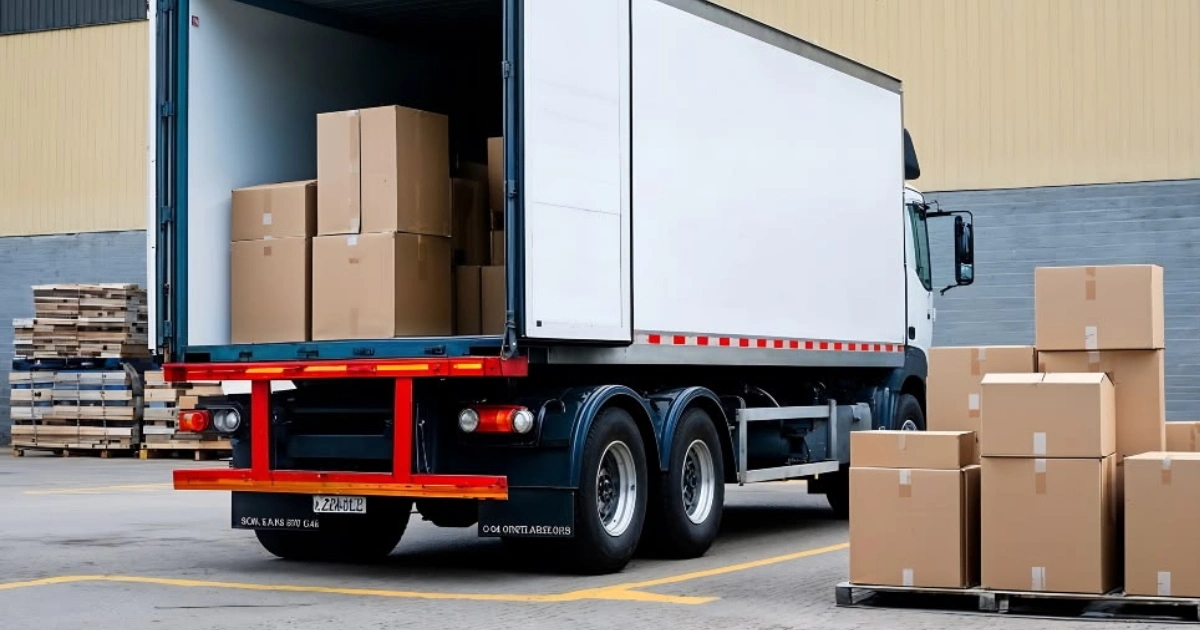
An 18-tonne truck is generally worth considering when your shipment requires more payload, pallet capacity or loading volume than smaller vehicles can provide.
Here are some of the most common situations.
1. You Need to Transport Heavy Pallets
One of the clearest reasons to use an 18-tonne truck is the weight of the shipment.
You may have only a few pallets, but if they contain heavy materials, the total payload can quickly exceed the limits of smaller vehicles.
Examples include:
- Building materials
- Bricks and blocks
- Timber
- Flooring materials
- Machinery parts
- Industrial components
- Manufacturing supplies
- Heavy equipment
Always calculate the total shipment weight, rather than judging the load by pallet count alone.
2. You Have a Large Pallet Delivery
An 18-tonne truck can carry up to 14 standard UK pallets based on the stated vehicle specification.
This makes it suitable for businesses moving larger quantities of goods between:
- Warehouses
- Distribution centres
- Construction sites
- Factories
- Retail locations
- Commercial premises
- Suppliers and customers
If a shipment cannot comfortably fit into a smaller vehicle, an 18-tonne truck can provide the additional loading capacity required.
3. You Are Moving Construction Materials
Construction companies frequently need to move heavy materials between suppliers, storage facilities and building sites.
An 18-tonne truck can be suitable for deliveries such as:
- Bricks
- Blocks
- Cement products
- Steel components
- Timber
- Flooring
- Insulation
- Building supplies
- Site equipment
- Heavy tools
Construction deliveries can also involve difficult access and loading conditions, so it is important to consider the collection and delivery site before selecting the vehicle.
4. You Need to Transport Heavy Machinery
Machinery can be difficult to transport because it may be both heavy and bulky.
An 18-tonne truck can be considered for suitable machinery and equipment that falls within its payload and dimensional limits.
Examples can include:
- Workshop machinery
- Manufacturing equipment
- Industrial components
- Commercial equipment
- Generators
- Engineering equipment
- Agricultural equipment
Before booking, provide the courier with the machinery’s exact weight, dimensions and loading requirements.
If the equipment is particularly large, heavy or unusual in shape, specialist heavy haulage may be more appropriate.
5. Your Load Is Too Large for a 7.5-Tonne Truck
A 7.5-tonne truck can be useful for medium-sized commercial deliveries, but it has a lower payload and loading capacity.
For comparison, the stated capacities are:
7.5-Tonne Truck
- Up to 10 standard UK pallets
- Maximum payload: 2,500kg
- Approx. 25m³
18-Tonne Truck
- Up to 14 standard UK pallets
- Maximum payload: 8,000kg
- Approx. 38m³
If your shipment exceeds the practical payload or loading capacity of a 7.5-tonne truck, moving up to an 18-tonne vehicle may be the better option.
6. You Need More Loading Space
Weight is not always the deciding factor.
Some goods are relatively light but take up a large amount of space.
For example, a shipment of bulky commercial products may fill a smaller vehicle before reaching its maximum payload.
An 18-tonne truck offers approximately 38m³ of loading volume, providing substantially more space for large consignments.
This can be useful for:
- Bulky equipment
- Large commercial stock
- Furniture
- Packaging materials
- Retail goods
- Lightweight but high-volume products
The vehicle should therefore be selected based on both payload and cubic capacity.
7. You Need a Tail Lift for Loading
A tail lift can make a significant difference when transporting heavy or palletised goods.
If the collection or delivery location does not have a suitable loading dock or forklift, a tail lift can help move appropriate goods between ground level and the vehicle.
An 18-tonne truck can be supplied with a tail lift, making it useful for certain commercial deliveries where additional loading equipment is required.
Tell the courier about your tail lift requirement before booking so the correct vehicle can be allocated.
8. You Are Delivering to a Commercial Site
An 18-tonne truck can be suitable for regular business-to-business transport.
For example, a manufacturer may need to move several pallets of components to another facility, while a construction company may need materials delivered directly to a project.
Typical commercial routes include:
Warehouse → Construction Site
Factory → Distribution Centre
Supplier → Business Premises
Manufacturing Site → Customer
Storage Facility → Retail Location
The vehicle should always be suitable for the access conditions at both ends of the journey.
9. You Need to Move Multiple Heavy Items Together
Sometimes transporting several items separately is less practical than moving them in one vehicle.
For example, a business may need to move:
- Several pieces of equipment
- Multiple pallets
- Commercial stock
- Machinery components
- Construction materials
If the combined load remains within the vehicle’s payload and dimensional limits, an 18-tonne truck can provide the capacity to transport the shipment together.
This can simplify delivery planning and reduce the need for multiple vehicle movements.
How Much Can an 18-Tonne Truck Carry?
The stated SirdarJi vehicle specification gives an 18-tonne truck:
- Maximum payload: 8,000kg
- Pallet capacity: up to 14 standard UK pallets
- Loading volume: approximately 38m³
- Tail lift: available
However, these figures should be treated as vehicle specifications rather than a guarantee that every shipment can use the full capacity.
The actual suitable load depends on factors such as:
- Vehicle configuration
- Weight distribution
- Pallet dimensions
- Goods dimensions
- Load restrictions
- Loading method
- Delivery conditions
The courier should assess the complete shipment before confirming the vehicle.
18-Tonne Truck vs 7.5-Tonne Truck
Both vehicles are useful for commercial transport, but they serve different load requirements.
| Feature | 7.5-Tonne Truck | 18-Tonne Truck |
| Pallet capacity | Up to 10 UK pallets | Up to 14 UK pallets |
| Maximum payload | 2,500kg | 8,000kg |
| Approx. volume | 25m³ | 38m³ |
| Tail lift | Available | Available |
| Best suited to | Medium commercial loads | Heavy commercial loads |
If your shipment is relatively light and fits within a 7.5-tonne truck, there may be no reason to use an 18-tonne vehicle.
If the shipment is significantly heavier or requires more space, the 18-tonne option becomes more appropriate.
18-Tonne Truck vs Luton Van
A Luton van is useful for bulky deliveries but has a much lower payload than an 18-tonne truck.
Luton Van
- Up to 7 EU pallets
- Maximum payload: 1,050kg
- Approx. 14m³
- Tail lift available
18-Tonne Truck
- Up to 14 UK pallets
- Maximum payload: 8,000kg
- Approx. 38m³
- Tail lift available
A Luton may be ideal for furniture and bulky goods, while an 18-tonne truck becomes more suitable when the shipment involves significantly greater weight or volume.
How Do You Know If You Need an 18-Tonne Truck?
Before booking, ask yourself these questions:
How much does the shipment weigh?
Calculate the total weight of all goods, pallets and relevant packaging.
How many pallets are there?
Count the pallets and check their dimensions.
How much space does the load require?
Measure the overall dimensions and calculate the approximate volume.
Does the load need a tail lift?
Check whether a forklift or loading dock is available at collection and delivery.
Can the destination accept an 18-tonne vehicle?
Consider site access, road restrictions, unloading space and delivery arrangements.
Does the load require specialist transport?
If the goods are unusually large, extremely heavy or difficult to load, you may need specialist heavy haulage rather than a standard 18-tonne truck.
What Information Does a Courier Need to Allocate an 18-Tonne Truck?
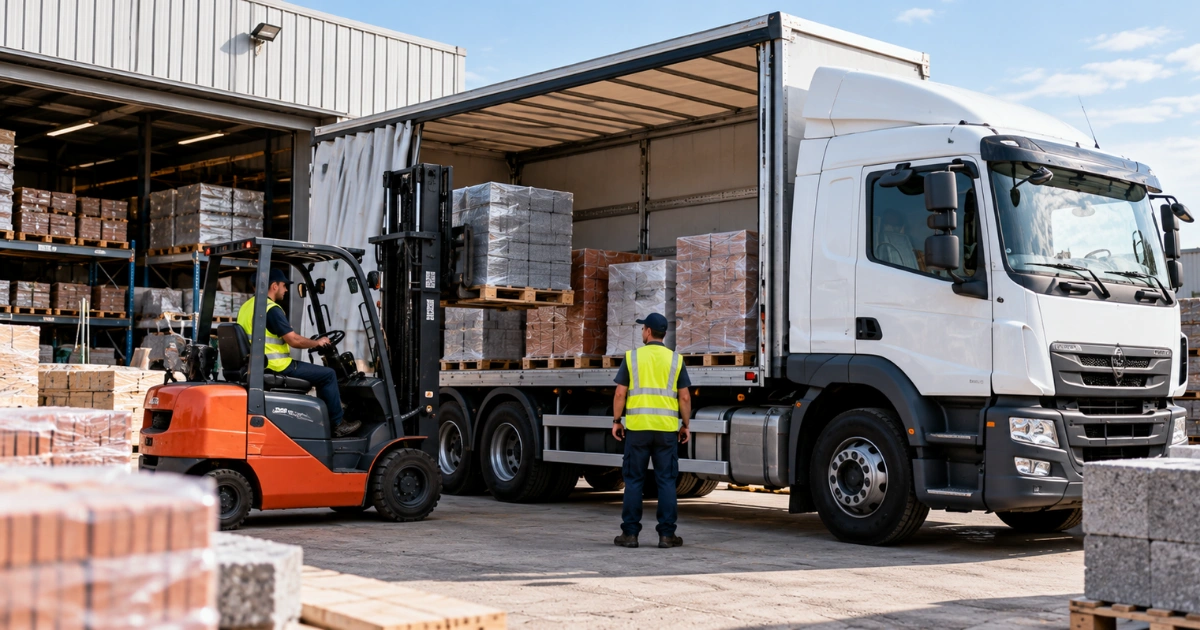
Give the courier accurate shipment information when requesting a quote.
This should include:
- Collection postcode
- Delivery postcode
- Number of pallets
- Pallet dimensions
- Total weight
- Individual pallet weights
- Overall dimensions
- Type of goods
- Loading requirements
- Tail lift requirement
- Collection date
- Delivery deadline
- Access restrictions
Accurate information helps the transport provider select a vehicle that is suitable for the shipment.
Can an 18-Tonne Truck Be Used for Same-Day Delivery?
Yes, an 18-tonne truck can be used for same-day commercial transport where the route, load and booking requirements allow it.
This can be useful when heavy goods need to reach another location on the same day rather than waiting for a standard delivery schedule.
Common examples include:
- Urgent construction materials
- Replacement machinery
- Manufacturing components
- Critical commercial stock
- Heavy equipment
- Time-sensitive pallet deliveries
For urgent transport, provide the collection and delivery details as early as possible so the appropriate vehicle can be arranged.
Is an 18-Tonne Truck Suitable for Nationwide Transport?
An 18-tonne truck can be used for commercial deliveries across the UK, subject to the route, vehicle restrictions and load requirements.
Businesses may use this type of vehicle for:
- Regional distribution
- Nationwide pallet delivery
- Supplier deliveries
- Warehouse transfers
- Construction logistics
- Industrial transport
- Business-to-business deliveries
For longer-distance transport, route planning also needs to consider vehicle restrictions, delivery windows and access requirements.
When Is an 18-Tonne Truck Too Large?
Using a larger vehicle is not automatically better.
An 18-tonne truck may be unnecessary when:
- You only have a small parcel
- The load weighs very little
- One small van can carry the goods
- The shipment fits comfortably into a Sprinter
- A Luton is sufficient for the required volume
- The collection location cannot accommodate the vehicle
For smaller consignments, choosing a smaller vehicle can make the delivery more practical and cost-efficient.
The objective is to select the right vehicle for the load, not simply the largest available vehicle.
When Should You Move Up to a 26-Tonne Truck?
An 18-tonne truck has a stated payload of up to 8,000kg, while a 26-tonne truck provides a much higher payload capacity.
A 26-tonne vehicle may be worth considering when:
- The load exceeds the 18-tonne truck’s payload
- You have a particularly heavy commercial shipment
- The shipment requires greater loading capacity
- The number or dimensions of the goods exceed the practical capacity of an 18-tonne vehicle
For very large loads, the vehicle should be selected after reviewing the exact weight, dimensions and loading requirements.
18-Tonne Truck for Pallet Transport
Pallet transport is one of the most common applications for larger commercial vehicles.
An 18-tonne truck can carry up to 14 standard UK pallets based on the stated capacity.
This makes it suitable for businesses transporting palletised:
- Building materials
- Retail products
- Industrial goods
- Machinery
- Manufacturing components
- Commercial stock
- Equipment
However, pallet count alone does not determine whether the vehicle is suitable. The weight of each pallet and the total shipment weight must also remain within the vehicle’s limits.
Book the Right 18-Tonne Transport Vehicle
Selecting the right truck starts with understanding the load.
An 18-tonne truck can be a strong option when you need to transport heavy commercial goods, multiple pallets, bulky equipment or a shipment that exceeds the practical capacity of smaller vans and trucks.
With a stated capacity of up to 14 standard UK pallets, 8,000kg payload and approximately 38m³ of space, it can handle a wide range of commercial transport requirements.
SirdarJi Couriers provides 18-tonne truck transport, pallet delivery, same-day courier services, next-day delivery, overnight transport, logistics and heavy haulage across the UK.
For an accurate vehicle choice, provide the shipment’s weight, dimensions, pallet quantity, collection details and delivery requirements before booking.
Frequently Asked Questions
What is an 18-tonne truck used for?
An 18-tonne truck is commonly used for heavy commercial deliveries, pallet transport, construction materials, machinery, industrial equipment and large business consignments.
How many pallets can an 18-tonne truck carry?
The stated capacity is up to 14 standard UK pallets.
How much weight can an 18-tonne truck carry?
The stated maximum payload is 8,000kg. Actual usable payload depends on the vehicle and load configuration.
Does an 18-tonne truck have a tail lift?
A tail lift is available on the stated 18-tonne truck specification, subject to vehicle availability and booking requirements.
Is an 18-tonne truck suitable for construction deliveries?
Yes. It can be suitable for transporting building materials, equipment, machinery and palletised construction supplies, provided the load and site conditions are appropriate.
Can an 18-tonne truck make same-day deliveries?
Yes. An 18-tonne truck can be used for same-day commercial transport where the route, vehicle availability and shipment requirements allow.
Should I use an 18-tonne truck or a 7.5-tonne truck?
Consider the total weight, volume and pallet count. A 7.5-tonne truck may be sufficient for medium loads, while an 18-tonne truck provides substantially greater payload and loading capacity.
When do I need a 26-tonne truck instead?
A 26-tonne truck may be more appropriate when the shipment exceeds the practical payload or capacity of an 18-tonne vehicle.
What information should I provide when booking an 18-tonne truck?
Provide the number of pallets, total weight, pallet dimensions, overall dimensions, collection and delivery locations, loading requirements and delivery deadline.
Can an 18-tonne truck transport heavy machinery?
It can transport suitable machinery when the machinery’s weight, dimensions and loading requirements fall within the vehicle’s limits. Larger or unusual machinery may require specialist heavy haulage.


