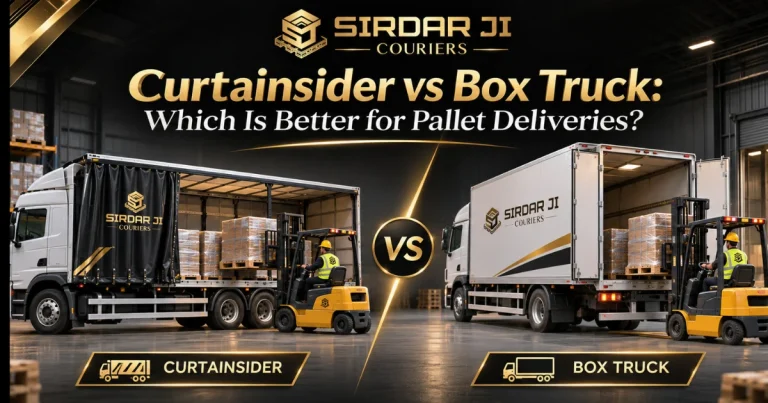
Choosing between a curtainsider and a box truck depends on the type of goods you are transporting, how they need to be loaded and the facilities available at the collection and delivery locations.
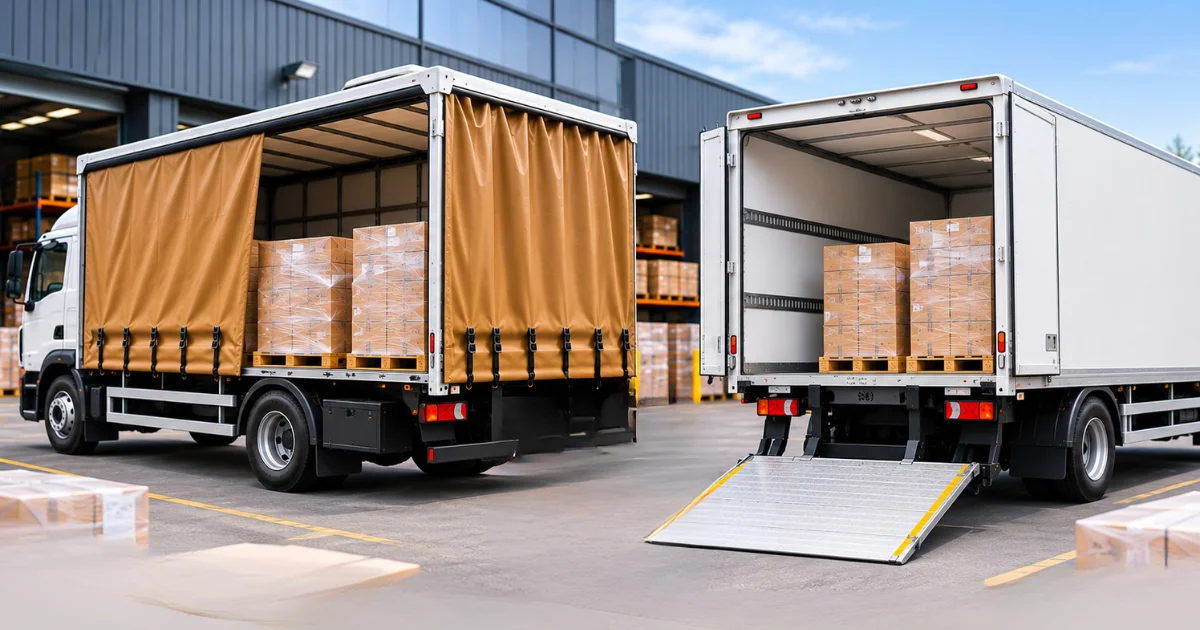
Both vehicles are used for commercial freight and pallet deliveries, but their body designs offer different advantages. A curtainsider has a rigid roof and framework with flexible side curtains that can be opened to provide side access. A box truck has a fixed, enclosed body with rigid walls and rear access.
For businesses moving standard pallets, warehouse stock, building materials or commercial equipment, understanding these differences helps identify a suitable vehicle before arranging transport.
In general, a curtainsider is useful when side loading or forklift access is important, while a box truck is suitable when goods need to travel inside a rigid enclosed body. However, the best option depends on the load, loading equipment, security requirements and delivery conditions.
What Is a Curtainsider Truck?
A curtainsider is a commercial vehicle with a load area covered by a flexible curtain on one or both sides. The curtains can be pulled back to provide access to the cargo area, while the roof, floor and supporting framework form the vehicle’s main structure.
Unlike a conventional enclosed box body, a curtainsider can offer greater flexibility during loading and unloading.
This design is particularly useful when goods need to be loaded from the side rather than only through the rear doors.
How Does a Curtainsider Work?
The side curtains are secured during transport to protect the load from normal road weather conditions. When the vehicle reaches a suitable loading area, the curtains can be opened to expose the side of the load space.
This allows forklifts and other suitable equipment to approach from the side, depending on the vehicle design and site arrangements.
Curtainsiders are commonly used for:
- Palletised goods moving between warehouses.
- Building materials and packaged construction products.
- Manufacturing components and commercial stock.
- Retail and wholesale deliveries.
- Freight that needs flexible loading access.
The main advantage is loading flexibility. However, a curtain is not the same as a rigid wall. Businesses transporting goods that require a fully enclosed, secure body should consider whether a curtainsider meets their specific requirements.
What Is a Box Truck?
A box truck is a commercial vehicle with a fixed, rigid cargo body attached to its chassis. Its load compartment has solid walls, a roof and a floor, creating an enclosed space for transporting goods.
Most box trucks have rear doors for loading and unloading. Depending on the vehicle design, they may also have a tail lift to help move heavy items between ground level and the cargo floor.
The enclosed body can be useful for goods that need protection from direct exposure to road weather and external conditions during transport.
Box trucks are commonly used for:
- General commercial deliveries.
- Packaged retail and wholesale goods.
- Furniture and household items.
- Electrical equipment and appliances.
- Palletised products that can be loaded through the rear.
A box truck is not automatically suitable for every pallet delivery. The internal dimensions, rear door opening, floor height and available loading equipment must all match the shipment.
What Is the Difference Between a Curtainsider and a Box Truck?
The main difference is how each vehicle is constructed and how goods can be loaded.
A curtainsider provides flexible side access through its opening curtains, while a box truck has rigid enclosed walls and generally relies on rear access.
| Feature | Curtainsider Truck | Box Truck |
| Body construction | Rigid framework with flexible side curtains | Fixed rigid enclosed body |
| Side loading | Available on suitable designs | Generally not available |
| Rear loading | Available | Available |
| Weather protection | Protects against normal road weather when properly secured | Rigid enclosed body provides protection from direct weather exposure |
| Loading flexibility | Greater side-loading flexibility | Primarily rear-loading access |
| Forklift access | Can allow side access | Usually through the rear |
| Pallet deliveries | Suitable when side or rear access is useful | Suitable when pallets can be loaded through the rear |
| Security | Curtains may offer less physical security than rigid walls | Rigid body provides a more enclosed physical barrier |
| Tail lift | Depends on vehicle specification | Often available on suitable models |
The exact features depend on the vehicle and body configuration. For example, not every curtainsider has the same opening arrangement, and not every box truck has a tail lift.
Curtainsider vs Box Truck: Which Is Better for Pallet Deliveries?
Neither vehicle is universally better for pallet deliveries. The right choice depends on the loading facilities, pallet arrangement and delivery location.
When Is a Curtainsider Better?
A curtainsider may be more suitable when the loading or unloading site needs access from the side of the vehicle.
For example, a warehouse may have a loading area where forklifts can approach the vehicle from the side. Opening the curtain can make it easier to load or unload pallets without relying entirely on rear access.
Curtainsiders can be particularly useful when:
- Goods need to be loaded from the side.
- Forklifts are available at the collection and delivery locations.
- Several pallets need to be loaded or unloaded efficiently.
- The shipment includes long or awkwardly shaped commercial products.
- The loading site has suitable space for side access.
However, the site must have enough room to open the curtain and operate handling equipment safely.
When Is a Box Truck Better?
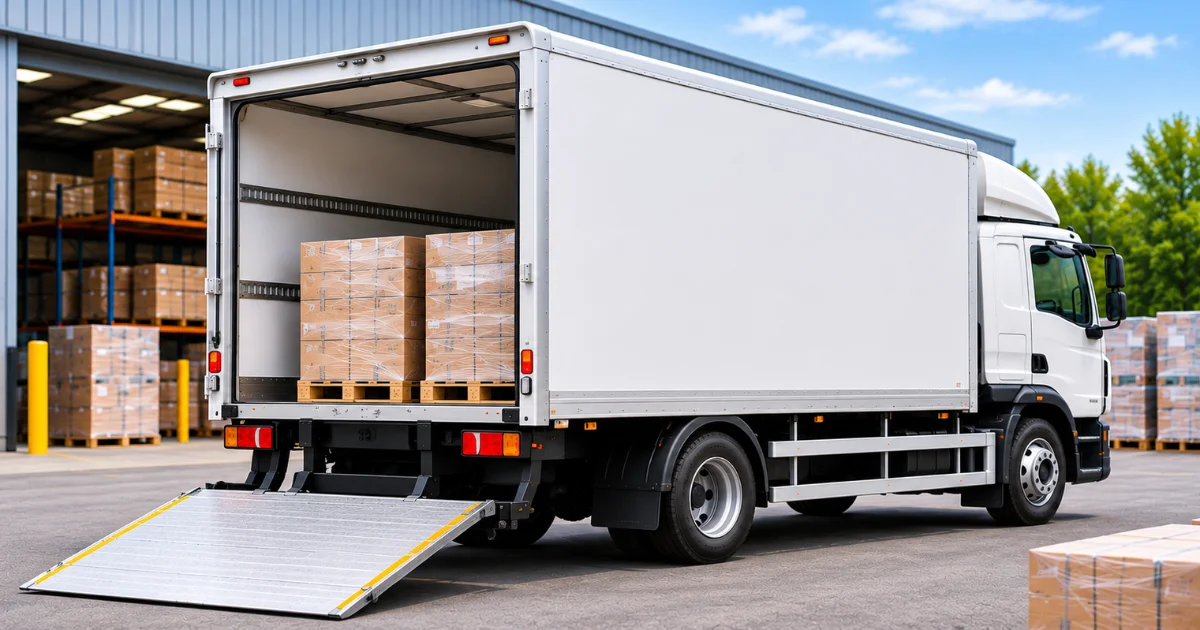
A box truck may be more suitable when the goods need to travel inside a rigid enclosed body and rear loading is sufficient.
For example, a business transporting packaged products between a warehouse and a retail location may prefer an enclosed vehicle with rear access.
Box trucks can be suitable when:
- Goods need the protection of a rigid enclosed body.
- Loading and unloading take place through rear doors.
- The delivery location has a suitable loading bay.
- A tail lift is required for certain ground-level deliveries.
- The cargo consists of packaged products, furniture or commercial equipment.
The rear opening and internal dimensions still need to be checked against the size of the pallets and handling equipment.
Curtainsider vs Box Truck: Which Truck Offers Better Weather Protection?
A box truck has rigid walls and a roof, providing an enclosed cargo compartment. This can offer more protection from direct exposure to rain, wind and other external conditions.
A curtainsider also protects goods during normal road transport when its curtains are properly secured. However, its side curtains are flexible rather than rigid.
This distinction matters when transporting goods that are sensitive to moisture, dust or environmental exposure.
For example, packaged retail products may be suitable for either vehicle when they are properly packed and secured. Goods requiring a more controlled environment may need specialist packaging or a dedicated vehicle with the appropriate specifications.
Neither a standard curtainsider nor a standard box truck should automatically be treated as temperature-controlled transport.
Is a Curtainsider More Secure Than a Box Truck?
A box truck generally offers a stronger physical barrier because its cargo area has rigid walls and an enclosed body.
A curtainsider uses flexible material along its sides, which does not provide the same level of physical resistance as a solid wall.
However, security depends on more than the vehicle body. It also involves:
- The type of goods being transported.
- Locks and security arrangements.
- Cargo securing and load protection.
- Driver procedures and vehicle monitoring.
- Collection and delivery site security.
Businesses transporting valuable or sensitive goods should explain their security requirements before booking. The transport provider can then assess whether the selected vehicle and arrangements are appropriate.
Curtainsider and Box Truck: Can Both Vehicles Carry Standard UK Pallets?
Yes, both vehicle types can be configured to carry standard UK pallets, provided their internal dimensions, payload and loading arrangements allow it.
However, there is no single pallet capacity for all curtainsiders or box trucks. Capacity depends on the vehicle’s length, width, body design, axle configuration and permitted payload.
You should consider:
Pallet dimensions: Confirm whether the shipment uses standard UK pallets, Euro pallets or non-standard sizes.
Total pallet weight: A vehicle may have enough floor space but insufficient legal payload for the complete shipment.
Loading direction: Establish whether pallets need to be loaded from the rear or whether side access is necessary.
Internal dimensions: Check the usable floor area, door opening and available headroom.
Handling equipment: Confirm whether forklifts, pallet trucks or a tail lift will be needed.
For example, a consignment of ten standard UK pallets may fit within one vehicle’s available floor space but not another’s. The number of pallets alone does not establish whether the vehicle is suitable.
What Should You Check Before Booking a Curtainsider or Box Truck?
Before arranging pallet transport, provide the transport company with enough information to assess the vehicle and loading requirements.
1. Confirm the Number and Dimensions of Pallets
State how many pallets need to be moved and provide their dimensions. If the goods extend beyond the pallet footprint, mention this as well.
2. Calculate the Total Load Weight
The combined weight of the goods, pallets and packaging must remain within the vehicle’s permitted payload.
3. Check the Loading Facilities
Confirm whether the collection and delivery sites have forklifts, loading bays or suitable unloading equipment.
4. Establish Whether Side Loading Is Necessary
If the site requires forklift access from the side, a suitable curtainsider may be more appropriate than a conventional box truck.
5. Check the Delivery Location
Consider road access, turning space, height restrictions and the area available for loading or unloading.
6. Explain Any Special Handling Requirements
If goods are fragile, valuable, unusually shaped or sensitive to weather conditions, tell the transport provider before booking.
These checks help prevent situations where a vehicle arrives but cannot be loaded or unloaded as planned.
Are Curtainsider Trucks More Expensive Than Box Trucks?
There is no universal price difference between the two vehicle types. Transport costs depend on the specific vehicle, journey and service requirements.
Factors that can influence a quotation include:
- Journey distance: Longer journeys generally involve more driving time and fuel.
- Vehicle size and specification: Different body types and configurations have different operating requirements.
- Load weight and dimensions: Heavy or bulky goods may require a particular vehicle.
- Loading arrangements: Side loading, rear loading, forklift availability and tail-lift requirements can affect the job.
- Delivery urgency: Same-day and dedicated transport may involve different scheduling arrangements from planned deliveries.
- Collection and delivery access: Difficult access or additional handling requirements may affect the quotation.
Rather than choosing based on an assumed price difference, compare quotations for the same load, route, delivery time and handling arrangements.
Which Vehicle Should Your Business Choose?
The best vehicle depends on the nature of your goods and how they need to be handled.
| Business requirement | Vehicle to consider | Why |
| Side-loading pallet deliveries | Curtainsider | Provides side access on suitable vehicles |
| Warehouse-to-warehouse freight | Curtainsider or box truck | Depends on loading facilities and shipment requirements |
| Packaged retail stock | Box truck | Provides a rigid enclosed cargo body |
| Furniture and commercial equipment | Box truck | Suitable for many rear-loaded enclosed deliveries |
| Goods requiring forklift access from the side | Curtainsider | Can simplify access where the site permits it |
| General pallet deliveries | Either | Depends on dimensions, weight and loading arrangements |
The important point is to select the vehicle around the delivery operation, not just the goods themselves. A suitable truck needs to accommodate the load and work with the collection and delivery facilities.
Frequently Asked Questions
What is the main difference between a curtainsider and a box truck?
A curtainsider has flexible side curtains that can be opened to provide access to the cargo area. A box truck has a fixed rigid body with enclosed walls and generally uses rear doors for loading and unloading.
Is a curtainsider suitable for pallet delivery?
Yes. A curtainsider can be suitable for pallet deliveries, particularly when side-loading access is useful. Its actual pallet capacity depends on its dimensions, payload and configuration.
Can a box truck carry pallets?
Yes. Box trucks can transport pallets when the internal floor space, rear door opening and payload are suitable. Forklifts, pallet trucks or tail lifts may be needed depending on the loading arrangements.
Can a forklift load a curtainsider from the side?
Many curtainsiders are designed to allow side loading, so a forklift can access the cargo area when the curtain is opened. The site must have sufficient space and suitable equipment for safe loading.
Does a curtainsider protect goods from rain?
A properly secured curtainsider protects its load from normal road weather conditions. However, its flexible curtains do not provide the same rigid enclosure as a box body. Sensitive goods may need additional packaging or a different transport arrangement.
Is a box truck safer for valuable goods?
A rigid box body generally provides a stronger physical barrier than flexible curtains. However, overall security also depends on locks, vehicle security arrangements, monitoring, cargo handling and delivery procedures.
Do curtainsider trucks have tail lifts?
Some curtainsiders are fitted with tail lifts, but this is not a standard feature on every vehicle. Confirm the specific vehicle configuration when booking.
Which truck is best for ten UK pallets?
It depends on the pallet dimensions, total weight and loading arrangements. Both a suitable curtainsider and a box truck may be capable of carrying ten pallets. The vehicle’s actual floor space and legal payload must be checked.
Final Words
Curtainsider and box trucks both have important roles in commercial transport, but their designs suit different loading and delivery requirements.
A curtainsider is worth considering when flexible side access and forklift loading are important. A box truck may be more suitable when goods need to travel inside a rigid enclosed body and rear access is sufficient.
Before booking pallet transport, confirm the dimensions, weight, loading method and delivery access. These details will help you choose a vehicle that can handle the shipment safely and efficiently.