

Oversized loads are transported in the UK using suitable trucks, low loaders, extendable trailers or other specialist vehicles, depending on the load’s weight and dimensions. Before transport begins, the operator must assess the load, select suitable equipment, plan the route and check whether special notifications, permissions or escorts are required.
Items such as industrial machinery, large construction equipment, structural steel and agricultural machinery may be too wide, tall, long or heavy for ordinary delivery vehicles.
Transporting these goods requires more planning than a standard courier delivery. The vehicle must be suitable for the load, the route must accommodate the vehicle and cargo, and the transport arrangement must comply with applicable road regulations.
This guide explains how oversized loads are moved in the UK, what equipment is used and when specialist heavy haulage is required.
What Is an Oversized Load?
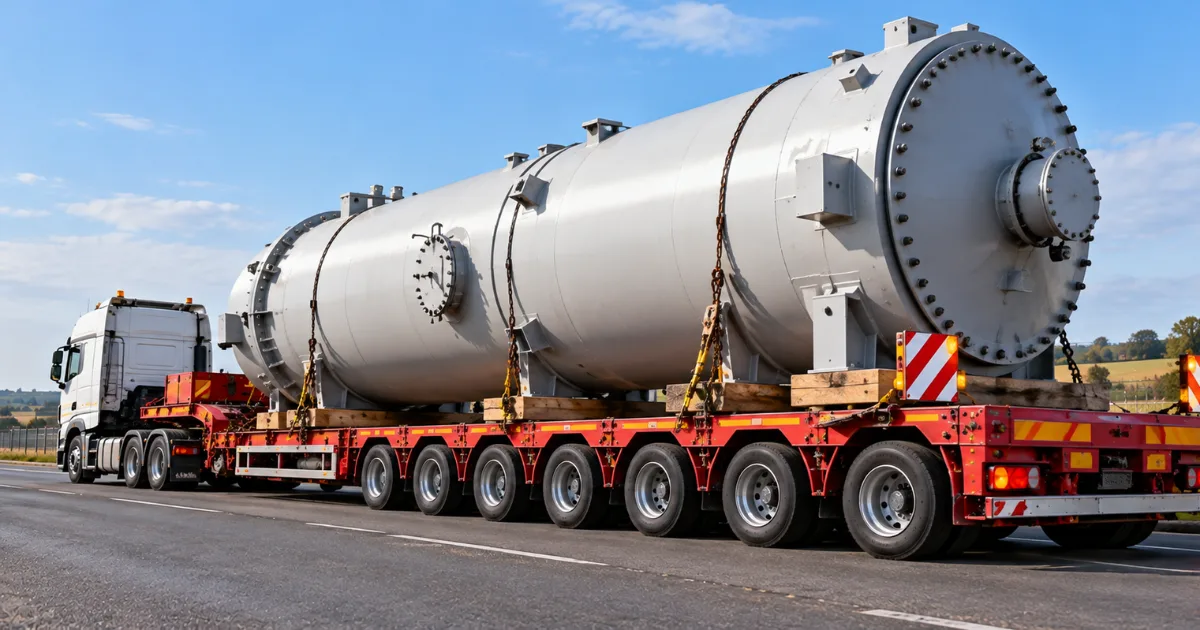
An oversized load is cargo that exceeds the normal dimensions or weight limits applicable to standard road transport.
It may be oversized because it is:
- Too wide for ordinary road transport limits
- Too tall to pass safely beneath bridges or other structures
- Too long for a standard vehicle
- Too heavy for a conventional vehicle or axle configuration
- Too large or awkwardly shaped for standard loading equipment
Oversized loads are not all the same. A large industrial machine may need a low-loader because of its height, while a long structural component may require an extendable trailer.
The correct transport method depends on the actual dimensions, weight and shape of the cargo.
What Types of Goods Require Oversized Transport?
Businesses across construction, manufacturing, agriculture and engineering may need specialist transport for large equipment and materials.
Common examples include:
- Excavators and other construction machinery
- Agricultural machinery
- Industrial production equipment
- Large generators
- Structural steel and long beams
- Large tanks and industrial components
- Heavy engineering equipment
- Oversized prefabricated structures
- Large commercial plant and equipment
Not every heavy item is an oversized load. A shipment can be heavy but still fit within ordinary vehicle dimensions, while a relatively light item may be too wide or tall for standard transport.
How Are Oversized Loads Transported?
The process usually involves several stages.
1. Measure and Weigh the Load
The first step is to establish the exact dimensions and weight of the cargo.
The transport provider needs to know:
- Overall length
- Overall width
- Overall height
- Total weight
- Weight distribution
- Lifting and loading points
- Whether any parts can be removed
- Whether the cargo can be safely secured
Measurements should account for the load as it will sit on the trailer, including any parts that extend beyond the main body.
Accurate information helps the operator determine the correct vehicle and identify potential restrictions before collection.
2. Select the Appropriate Transport Vehicle
The vehicle depends on the load’s characteristics.
Low-loader trailer: Often used for tall machinery and equipment because its low deck can reduce the overall loaded height.
Extendable trailer: Useful for long items such as structural steel or other equipment that exceeds a standard trailer’s length.
Flatbed trailer: Suitable for certain large materials and machinery that can be loaded and secured safely on an open platform.
Heavy-duty specialist trailer: May be required for exceptionally heavy loads or cargo with unusual weight distribution.
Rigid truck: Can transport some large commercial goods when the load fits within its capacity and dimensions.
A standard Arctic lorry may be sufficient for large palletised freight, but unusually wide, long, tall or heavy cargo may need specialist equipment.
3. Check Legal Requirements
Oversized and abnormal loads may be subject to specific UK rules.
Depending on the dimensions, weight, vehicle and route, the operator may need to arrange:
- Advance notifications to relevant authorities
- Special permissions or authorisations where applicable
- An appropriate route assessment
- Escort vehicles or other traffic management measures
- Compliance with vehicle, axle-weight and load-security rules
Requirements vary according to the load and the circumstances. Not every large load requires an escort, and the relevant thresholds and procedures should be checked before transport.
The haulier should establish which requirements apply before the vehicle is dispatched.
4. Plan the Route
Route planning is particularly important when the load exceeds standard dimensions.
The transport operator may need to assess:
- Bridge heights
- Road widths
- Weight restrictions
- Roundabouts and tight turns
- Traffic conditions
- Roadworks and temporary restrictions
- Access to the collection and delivery sites
- Suitable stopping or waiting locations
A route that is suitable for an ordinary lorry may not be suitable for an oversized load.
For example, a tall piece of machinery may need a route that avoids a low bridge, while a wide load may require more space around junctions and bends.
5. Load and Secure the Cargo
Oversized goods must be loaded using equipment appropriate to their weight, shape and lifting points.
Depending on the shipment, this may involve cranes, forklifts, ramps, winches or specialist lifting equipment.
Once loaded, the cargo must be secured against movement during braking, acceleration and cornering. Suitable restraints and load distribution are essential.
The operator should check that the load is stable, the restraints are appropriate and the vehicle remains within the applicable limits.
6. Complete the Journey and Unload Safely
The driver follows the planned route and any applicable transport conditions.
At the destination, the unloading process must also be planned. Large machinery may require a crane, forklift or suitable ground space, while some deliveries need a controlled unloading area.
Confirm these arrangements before collection to avoid delays when the vehicle arrives.
What Vehicles Are Used for Oversized Loads?
There is no single vehicle suitable for every oversized load.
| Vehicle or Equipment | Typical Application |
| Flatbed trailer | Large materials and suitable machinery |
| Low-loader | Tall construction equipment and plant |
| Extendable trailer | Long structural items and equipment |
| Heavy-duty specialist trailer | Exceptional weights or unusual load configurations |
| Rigid truck | Large commercial goods within vehicle limits |
| Arctic lorry | Large palletised loads and standard full-load freight |
The correct choice depends on the cargo, loading method, route and applicable legal limits.
What Is the Difference Between Heavy Haulage and Oversized Load Transport?
Heavy haulage focuses on transporting heavy or substantial cargo that may require larger vehicles or specialist equipment.
Oversized-load transport focuses on cargo that exceeds standard dimensional limits or otherwise requires special arrangements.
The two categories overlap, but they are not identical.
For example, a dense machine may be heavy without being unusually wide or tall. A long structural component may be oversized even if it is relatively light.
The transport provider should assess both the weight and dimensions before deciding whether specialist haulage is required.
How Much Does Oversized Load Transport Cost in the UK?
Oversized transport costs vary considerably because every load has different requirements.
The main factors include:
Load Dimensions and Weight
Large, heavy or awkwardly shaped cargo may require specialist trailers, lifting equipment and additional planning.
Distance
The route affects fuel, driver time and operating costs.
Vehicle and Equipment
A specialist low-loader or heavy-duty trailer may cost more to arrange than standard commercial transport.
Route Restrictions
If the load requires a detailed route assessment or special arrangements, planning costs may increase.
Permits, Notifications and Escorts
Where applicable, permissions, notifications, escort vehicles and traffic management can add to the total cost.
Loading and Unloading
Cranes, lifting equipment, additional labour and waiting time may affect the quote.
For an accurate estimate, provide the cargo’s dimensions, weight, collection and delivery postcodes, loading requirements and preferred delivery date.
Can Oversized Loads Be Transported Across the UK?
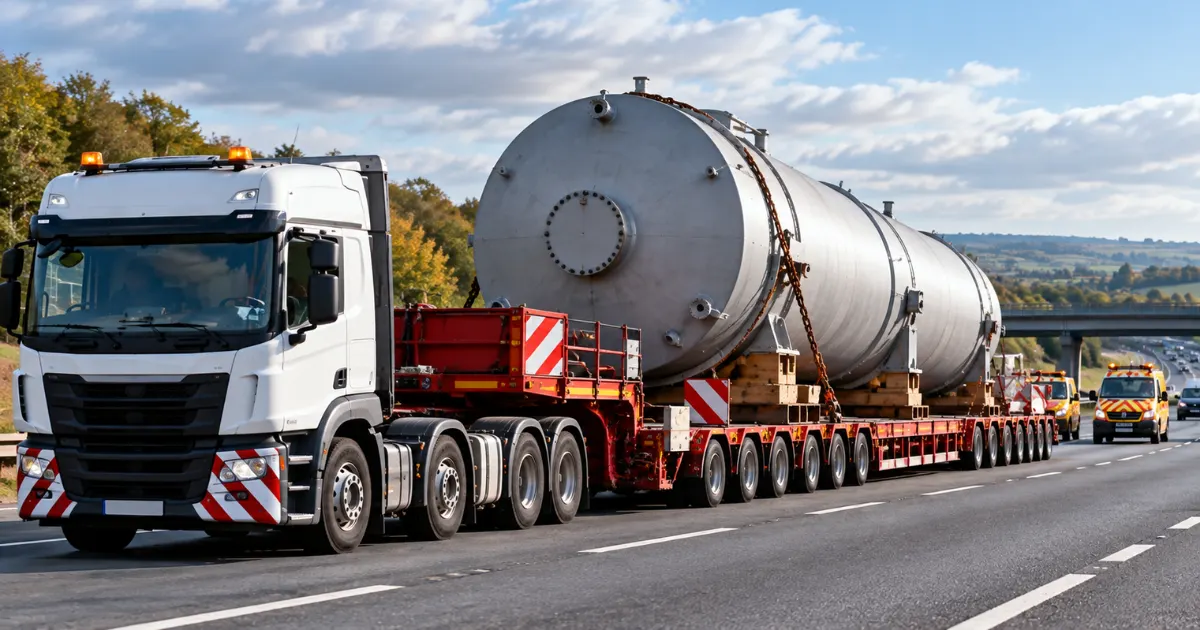
Yes. Oversized loads can be transported between locations across the UK when the vehicle, route and transport arrangements are suitable.
However, nationwide transport does not mean every road is accessible to every load. Some journeys require careful route planning, advance coordination and specific arrangements at the collection or delivery site.
For long-distance journeys, the operator should consider restrictions along the entire route, not just at the start and end points.
How Should You Prepare for an Oversized Load Collection?
Businesses can help avoid delays by preparing the following information before requesting a quote:
- Accurate cargo dimensions
- Total weight and weight distribution
- Collection and delivery addresses
- Photographs of the item, where useful
- Loading and unloading equipment available
- Access restrictions at both locations
- Preferred collection date
- Delivery deadline
- Any dismantling or lifting requirements
If the load is machinery, identify suitable lifting points and explain whether it can be moved under its own power.
Do not assume that the transport vehicle will include a crane, forklift or other lifting equipment unless this has been agreed.
When Do You Need Specialist Heavy Haulage?
Specialist heavy haulage may be necessary when a load exceeds standard vehicle capacities, has unusual dimensions or requires specialist loading equipment.
Examples include:
- Very heavy industrial machinery
- Tall construction plant
- Extra-long structural components
- Wide equipment
- Large generators
- Unusually shaped engineering components
A standard truck or Arctic lorry can transport many large commercial loads, but it should not be used for cargo that exceeds its legal or practical limits.
The transport provider should assess the shipment before confirming the vehicle.
Frequently Asked Questions
What is classed as an oversized load in the UK?
An oversized load is cargo that exceeds the standard dimensional limits or requires special arrangements for road transport. The applicable requirements depend on its dimensions, weight, vehicle and route.
Do oversized loads need an escort in the UK?
Some loads require escort vehicles or other traffic management measures, depending on their size and the applicable rules. Not every oversized load needs an escort.
Can a normal lorry transport an oversized load?
A standard lorry can transport large goods if they fit within its legal weight and dimensional limits. Loads exceeding those limits may require specialist vehicles and additional arrangements.
What is a low-loader used for?
A low-loader has a low loading deck and is commonly used to transport tall machinery and construction equipment where reducing the overall loaded height is important.
How much does oversized load transport cost?
The price depends on the cargo’s weight, dimensions, journey distance, vehicle requirements, route planning and any applicable permits, escorts or specialist equipment.
Can construction machinery be transported by road?
Yes. Construction machinery can be transported using suitable trucks, low-loaders or specialist trailers. The vehicle depends on the machine’s weight, dimensions and loading requirements.
What information should I provide for an oversized-load quote?
Provide the load’s exact dimensions and weight, collection and delivery locations, loading arrangements, access restrictions and required delivery date.
Arrange Transport for Large and Oversized Loads
Oversized load transport requires more planning than a standard delivery. The operator must select suitable equipment, check the load’s dimensions and weight, assess the route and arrange any necessary permissions or other measures.
SirdarJi Couriers provides commercial transport, logistics and heavy haulage services across the UK. For a large or unusually shaped shipment, share the cargo details and delivery requirements so we can assess the appropriate transport option.
The earlier the load is assessed, the easier it is to identify potential access problems, vehicle requirements and transport arrangements before collection.


