

The main difference between a rigid truck and an Arctic lorry is how the vehicle is built. A rigid truck has its cab and load-carrying body mounted on the same chassis, while an Arctic lorry consists of a tractor unit pulling a separate semi-trailer.
This difference affects how much each vehicle can carry, how much loading space it offers, how it manoeuvres and which deliveries it suits.
Rigid trucks are commonly used for regional distribution, construction deliveries and commercial transport. Arctic lorries are often used for large pallet shipments, full loads and long-distance haulage across the UK.
Understanding the difference helps you choose a suitable vehicle for your shipment without paying for unnecessary capacity.
What Is a Rigid Truck?
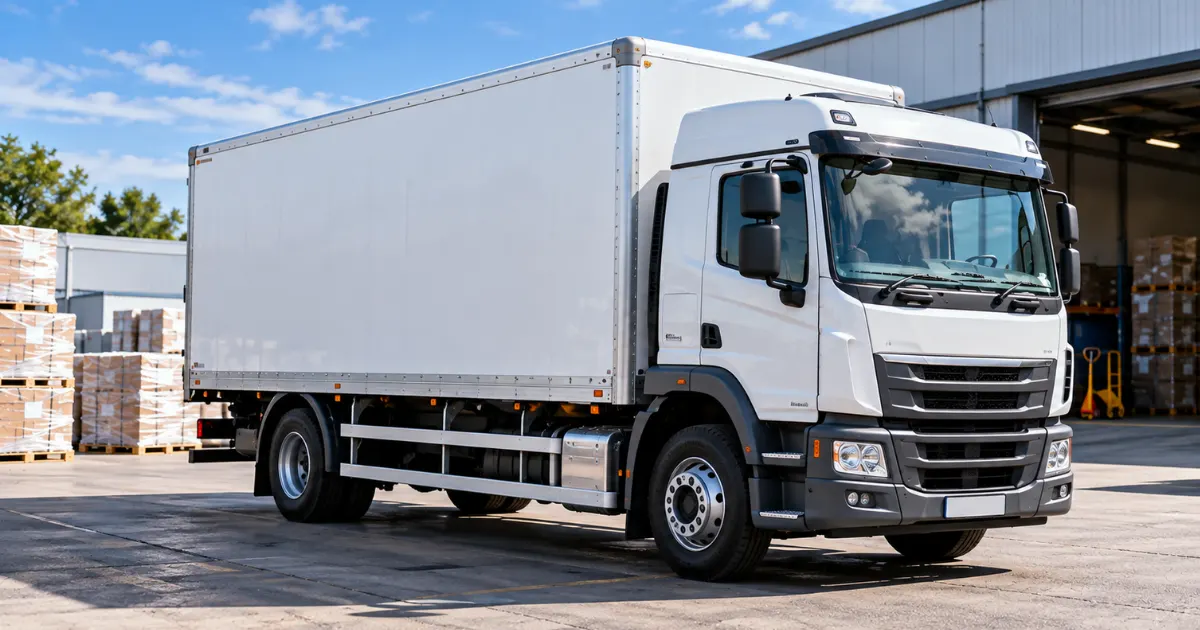
A rigid truck is a commercial vehicle in which the driver’s cab and the load-carrying body are attached to one chassis. The vehicle operates as a single unit rather than pulling a separate semi-trailer.
Rigid trucks come in different sizes, including 7.5-tonne, 18-tonne and 26-tonne vehicles.
Their capacity depends on the specific truck, body type, payload and loading configuration.
What Are Rigid Trucks Used For?
Rigid trucks are commonly used for:
- Pallet deliveries to warehouses and businesses
- Construction materials and site supplies
- Commercial stock distribution
- Machinery and industrial equipment
- Furniture and bulky goods
- Regional deliveries with multiple stops
- Deliveries to locations with restricted access
A rigid truck can be a practical choice when a van lacks the required payload but a large articulated vehicle would be unnecessary or difficult to manoeuvre.
What Is an Arctic Lorry?
An Arctic lorry is an articulated heavy goods vehicle made up of two main parts: a tractor unit and a semi-trailer.
The tractor unit provides the engine and cab, while the semi-trailer carries the goods. The trailer can be detached and replaced when required.
A 44-tonne Arctic is commonly used for large commercial loads and long-distance transport, subject to the applicable UK weight limits and operating conditions.
What Is an Arctic Lorry Used For?
Typical uses include:
- Full-load pallet transport
- Large warehouse transfers
- Manufacturing and industrial freight
- Retail distribution
- Construction supplies
- High-volume commercial deliveries
- Nationwide haulage
An Arctic is especially useful when a shipment needs more loading space or payload than a rigid truck can provide.
Rigid Truck vs Arctic Lorry: Key Differences
| Feature | Rigid Truck | Arctic Lorry |
| Construction | Cab and load body on one chassis | Tractor unit pulling a separate trailer |
| Common types | 7.5-tonne, 18-tonne and 26-tonne trucks | 44-tonne articulated combination |
| Load capacity | Depends on truck size and body | Generally suited to larger loads |
| Pallet capacity | Varies by vehicle | Can carry up to 26 standard UK pallets with a suitable trailer |
| Manoeuvrability | Often easier in tighter spaces | Requires more room to turn and position |
| Typical use | Regional deliveries and commercial transport | Full loads and long-distance haulage |
| Loading options | Depends on body and equipment | Depends on trailer and equipment |
| Access | Often more practical for smaller delivery sites | Requires suitable access for a larger vehicle |
These are general differences. Actual payload, pallet capacity and dimensions depend on the vehicle and load configuration.
Which Vehicle Carries More Pallets?
An Arctic lorry generally carries more pallets than a rigid truck of the types listed below.
For example, SirdarJi Couriers stated vehicle capacities are:
- 7.5-tonne truck: up to 10 standard UK pallets
- 18-tonne truck: up to 14 standard UK pallets
- 26-tonne truck: up to 15 standard UK pallets
- 44-tonne Arctic: up to 26 standard UK pallets
These figures are indicative vehicle specifications, not a guarantee that every load can use the full capacity. Pallet dimensions, weight, stacking and trailer configuration can affect the number that can be transported.
What Is the Difference in Payload?
Payload is the weight of the goods a vehicle can carry. It is different from gross vehicle weight, which includes the vehicle, its equipment and the load.
For example, the stated maximum payloads for the SirdarJi vehicle range are:
| Vehicle | Stated Maximum Payload |
| 7.5-tonne truck | 2,500kg |
| 18-tonne truck | 8,000kg |
| 26-tonne truck | 14,000kg |
| 44-tonne Arctic | 27,000kg |
Always confirm the actual payload available for the specific vehicle. The legal limit depends on the vehicle configuration and applicable restrictions.
A load may fit physically into a truck but still exceed its payload. That is why you should provide both the shipment’s dimensions and total weight when booking transport.
Which Vehicle Is Easier to Manoeuvre?
Rigid trucks are generally easier to position than articulated vehicles because they operate as a single unit.
This can make them more practical for some:
- Business premises
- Construction sites
- Urban delivery routes
- Locations with limited turning space
- Deliveries involving several stops
An Arctic lorry requires more space to turn, reverse and position its trailer. It is often well suited to distribution centres, warehouses and larger commercial sites with suitable access.
However, the right choice depends on the actual road conditions and delivery location. Check access restrictions before arranging a large vehicle.
Which Vehicle Is Better for Pallet Delivery?
The best option depends on the number of pallets, total weight and delivery requirements.
Choose a rigid truck when:
- Your shipment fits within its payload and loading capacity.
- You need to deliver to a site with limited space.
- You are transporting a moderate number of pallets.
- The route involves several regional delivery points.
Consider an Arctic lorry when:
- You have a large palletised consignment.
- You need to transport a full commercial load.
- Your shipment requires greater payload capacity.
- The collection and delivery sites can accommodate an articulated vehicle.
For one or a few pallets, a smaller van may be more suitable. A large truck is not automatically the most economical option.
Can Rigid Trucks and Arctic Lorries Have Tail Lifts?

Tail lift availability depends on the vehicle and body configuration.
A tail lift can help load or unload goods where a forklift or loading dock is unavailable. It does not replace the need for suitable pallet-handling equipment or safe unloading arrangements.
SirdarJi’s stated fleet includes tail lifts on selected rigid trucks, while tail lifts for Arctic vehicles are available on request. Confirm the requirement when booking, particularly if the delivery address has no loading facilities.
How Do You Choose Between a Rigid Truck and an Arctic Lorry?
Before selecting a vehicle, consider these five factors.
1. Number of Pallets
Count the pallets and confirm their dimensions. Do not assume that every pallet will fit simply because the vehicle’s advertised capacity appears sufficient.
2. Total Weight
Calculate the weight of all goods, including packaging and pallets. Confirm that the shipment falls within the vehicle’s available payload.
3. Goods Dimensions
Bulky or unusually shaped items can take up more space than their weight suggests. Provide the length, width and height of the shipment.
4. Site Access
Check road restrictions, turning space, loading areas and delivery-site access. A vehicle with greater capacity may not be suitable for a restricted location.
5. Delivery Deadline
Urgent deliveries may require a dedicated vehicle, while planned freight can often be arranged around standard transport schedules. The best option depends on the shipment and route.
Frequently Asked Questions
Is a rigid truck the same as an Arctic lorry?
No. A rigid truck has its cab and load body mounted on the same chassis. An Arctic lorry has a tractor unit pulling a separate semi-trailer.
Is an Arctic bigger than an 18-tonne truck?
An Arctic generally offers greater payload and pallet capacity than an 18-tonne rigid truck. The actual difference depends on the specifications of the vehicles being compared.
How many pallets can an Arctic lorry carry?
A suitable Arctic trailer can carry up to 26 standard UK pallets according to the stated SirdarJi specification. The actual capacity depends on pallet dimensions, load weight and trailer configuration.
Is a rigid truck better for urban deliveries?
It can be. Rigid trucks are generally easier to manoeuvre than articulated vehicles, although suitability depends on the road, site access and vehicle size.
Which vehicle is cheaper to hire?
There is no fixed answer. The price depends on the route, load, vehicle availability, delivery deadline and other requirements. Choosing a vehicle that matches the shipment can help avoid paying for unnecessary capacity.
Can an Arctic lorry carry heavy machinery?
It can carry suitable machinery within its payload and dimensional limits. Oversized or unusually heavy equipment may require specialist heavy haulage.


